Costa Rica's Southern Pacific Zone: The Wildest, Most Extraordinary Side of Pura Vida
Costa Rica's Southern Pacific Zone: The Wildest, Most Extraordinary Side of Pura Vida
By Kerri Wilson, Kerri'd Away Travel
Most travelers who visit Costa Rica experience the same version of it. They fly into Liberia, head to Guanacaste, and spend a week at a large all-inclusive resort with a swim-up bar and a manicured beach. It's beautiful. It's comfortable. And it barely scratches the surface of what Costa Rica actually is.
The southern Pacific zone — stretching from Manuel Antonio down through Dominical, Uvita, and all the way to the remote wilderness of Corcovado National Park — is a different country entirely. This is Costa Rica at its most raw, most alive, and most genuinely extraordinary.
If you're the kind of traveler who wants to experience a destination rather than simply visit it, the southern Pacific zone will change how you think about travel.
What Makes the Southern Pacific Different
The first thing that surprises visitors — even seasoned ones — is how much wilder the south feels compared to the more developed north. Where Guanacaste has large resort corridors and manicured beach towns, the southern Pacific has dense jungle spilling down to the ocean, rivers crossing the roads, and a landscape so intensely tropical it feels prehistoric.
It rains more here. The jungle is denser. The roads less predictable. And that's precisely what makes it extraordinary.
There are fewer large international hotel chains in this part of Costa Rica. What you find instead are extraordinary boutique properties, private estates, and eco-luxury lodges that sit within the jungle canopy — places where you wake up to the sound of howler monkeys and fall asleep to the sound of the Pacific.
This is not a destination for travelers who want everything sanitized and convenient. It's a destination for those who want to feel genuinely somewhere else.
Manuel Antonio — Where It Begins
Manuel Antonio is the gateway to the southern Pacific and the most visited destination in the zone — and for good reason. Manuel Antonio National Park is one of the most biodiverse places on earth, where three-toed sloths hang from the trees above the trail and white-faced capuchin monkeys patrol the beach with theatrical confidence.
The park itself is small enough to explore in a day but rich enough to reward multiple visits. Hire a local naturalist guide — this is non-negotiable. What looks like an empty canopy to the untrained eye is, to a knowledgeable guide, a symphony of wildlife. They will find things you would walk past a hundred times without seeing.
Manuel Antonio town has excellent restaurants, a lively atmosphere, and some beautiful boutique hotels perched on the hillsides above the coast with sweeping Pacific views. It's the right place to begin easing into the southern zone before venturing deeper south.
Pro tip: Book your national park entry in advance. Daily visitor numbers are limited and spots fill up quickly during high season.
Nauyaca Waterfalls — One of Costa Rica's Great Secrets
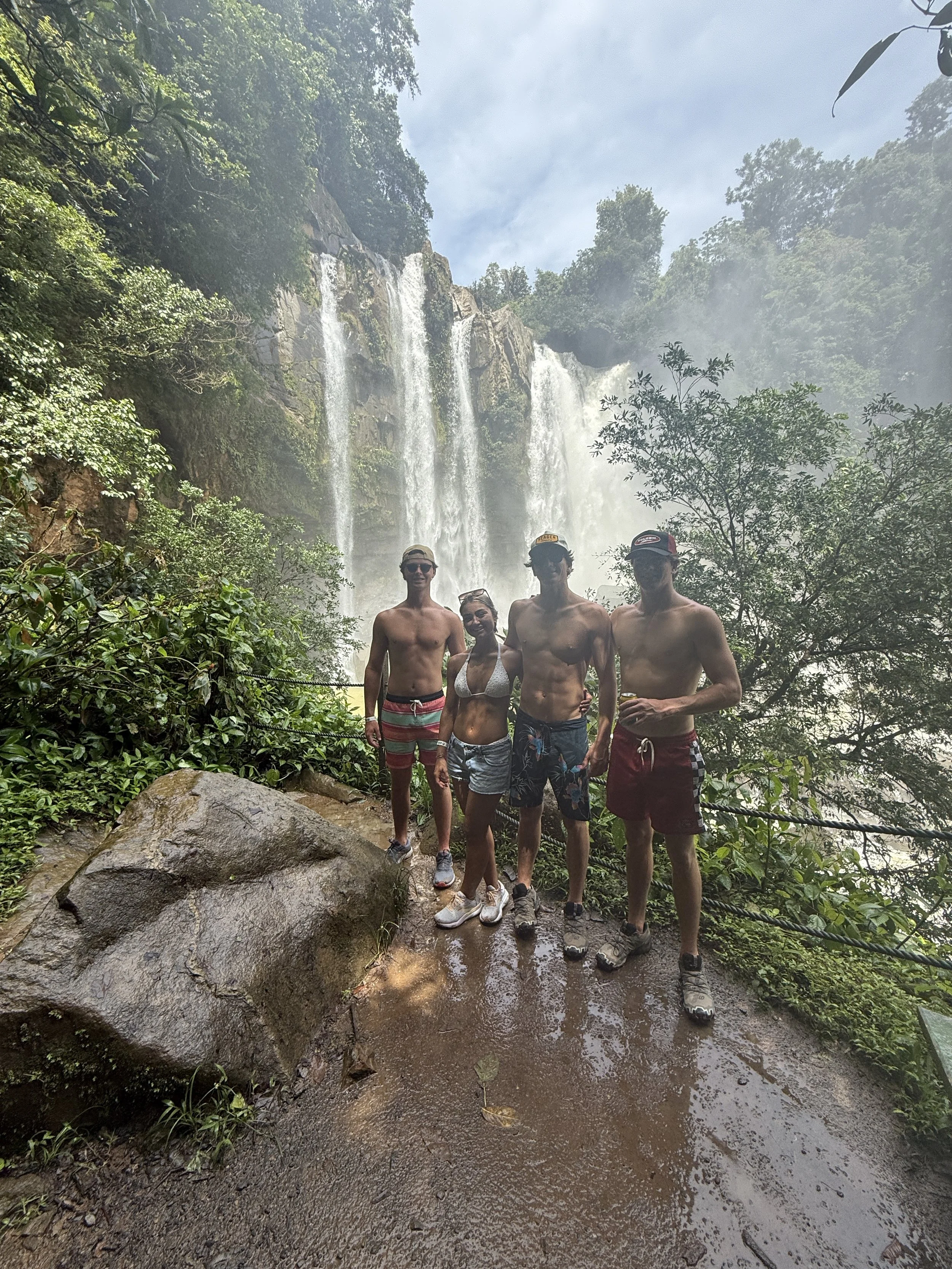
About 20 minutes south of Manuel Antonio, a dirt road leads toward one of Costa Rica's most spectacular natural experiences — the Nauyaca Waterfalls. The falls cascade in two dramatic tiers into a deep swimming pool surrounded by jungle, and reaching them is an adventure in itself.
You can hike the approximately 18 kilometer round trip through the jungle — a full day's commitment that is absolutely worth it for fit, adventurous travelers. Alternatively, arrive by horseback through the jungle and rivers, which many consider the more memorable way to make the journey.
When you arrive at the base of those falls and slip into the cool water beneath a curtain of jungle, you will understand immediately why this is one of the most beloved experiences in all of Costa Rica.
This is not a manicured attraction. The trail is real, the rivers are real, and the reward is absolutely real. Bring good shoes, plenty of water, and go with a guide who knows the route.
Kerri's Personal Favorite Experiences
These are the experiences I personally recommend to every client who visits the southern Pacific zone — tried, tested, and genuinely extraordinary.
Whitewater Rafting with Rafiki Safari Lodge
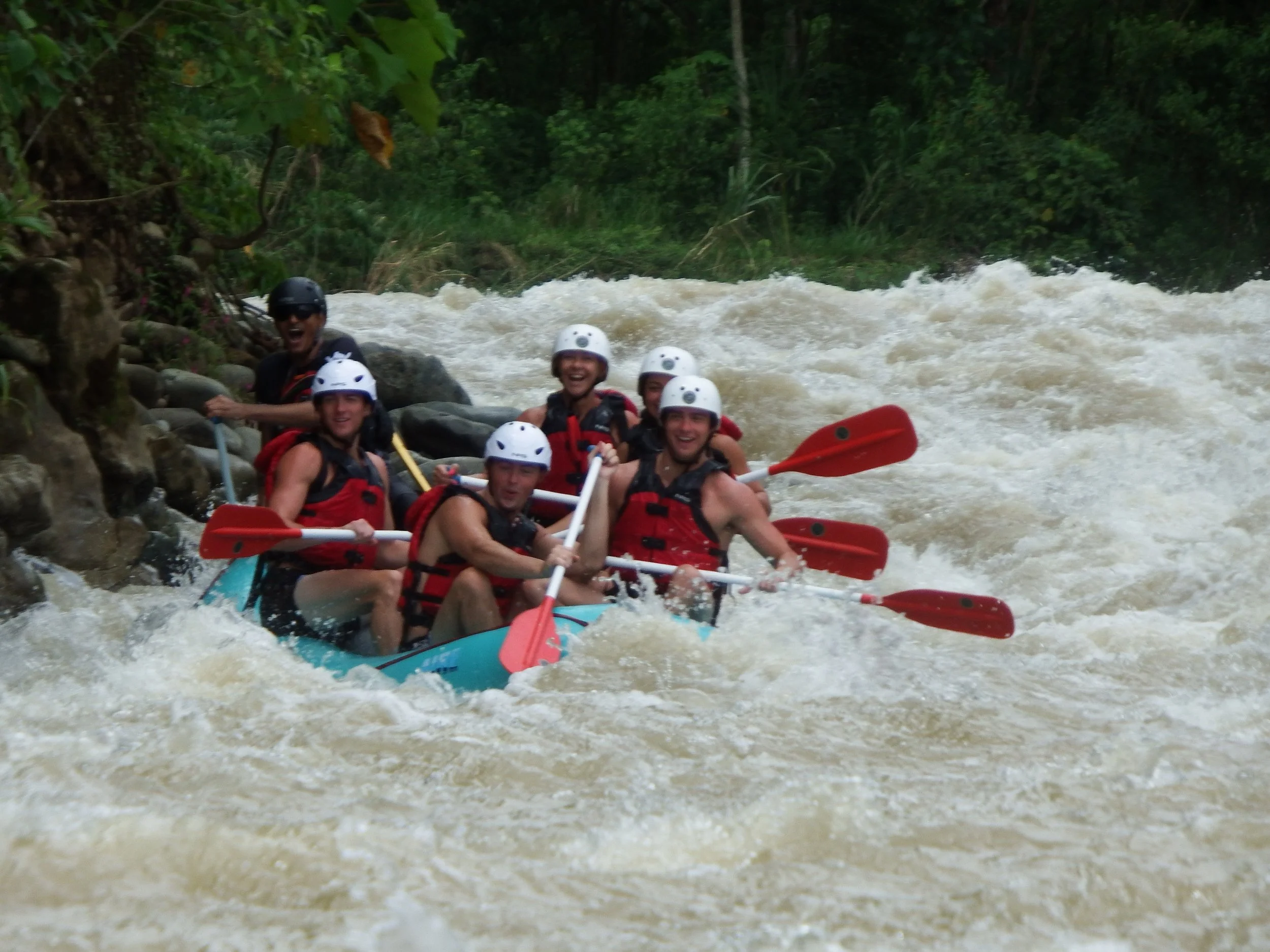
The General River offers some of the best whitewater rafting in Central America, and Rafiki Safari Lodge runs the definitive experience. Class III and IV rapids through a river canyon so beautiful it barely feels real — dense jungle walls rising on both sides, kingfishers darting across the water, and the kind of adrenaline that reminds you why you travel in the first place.
Rafiki combines the rafting with a safari-style lodge experience that is genuinely extraordinary — think open-air dining, wildlife walks, and the sound of the river from your cabin at night. This is one of those operators where the experience exceeds every expectation. I recommend them without hesitation.
Canyoning and Waterfall Rappelling at Diamante
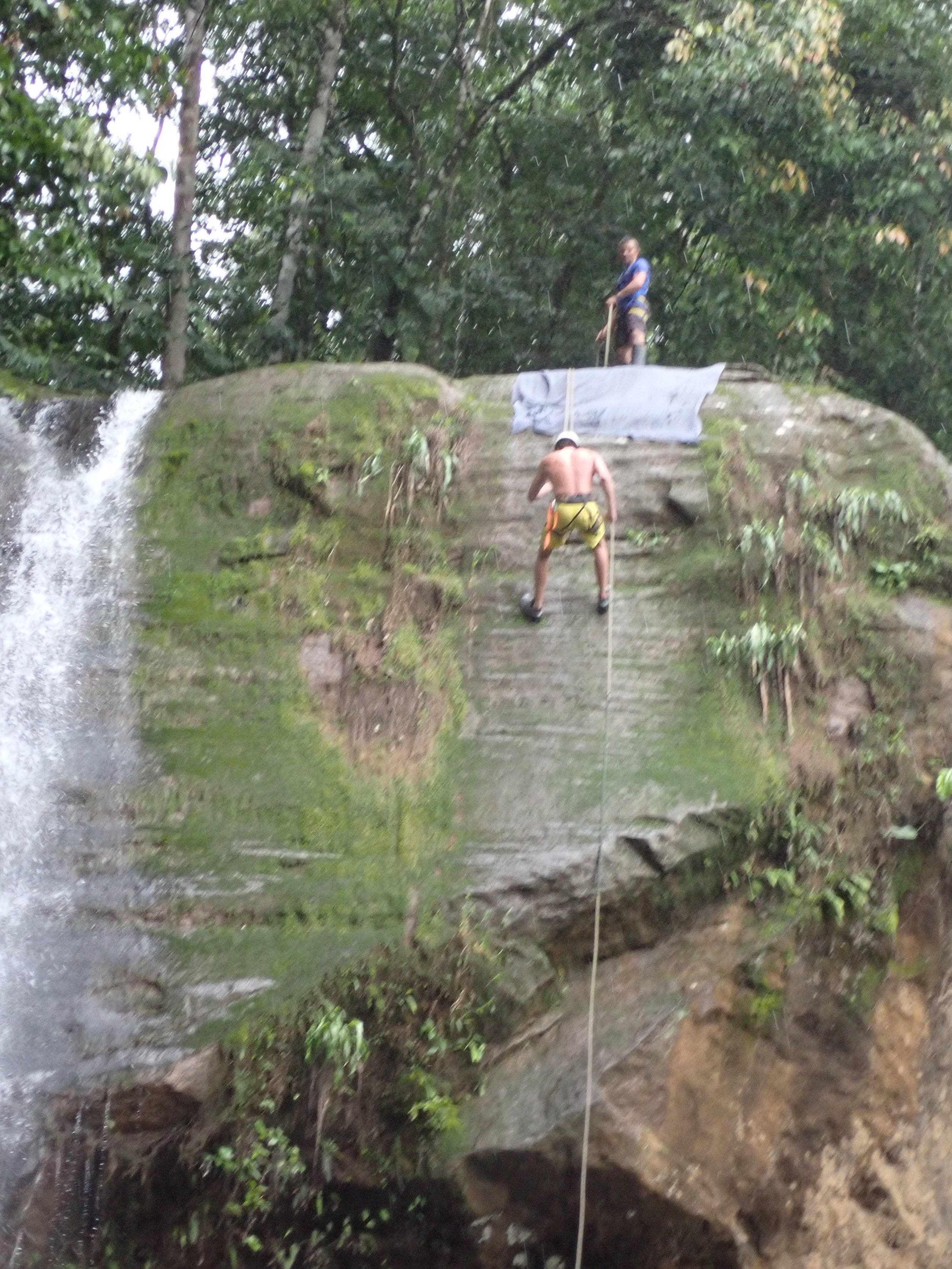
If there is one experience in the southern Pacific zone that I tell every single client they cannot miss, it is canyoning and waterfall rappelling at Diamante. Rappelling down the face of a jungle waterfall — the roar of the water, the mist, the impossibly green walls of jungle around you — is one of those moments that exists outside ordinary life.
Diamante is not for the faint-hearted. But for adventurous travelers who push themselves to do it, the reward is a story they will tell for decades. The guides are expert, the safety standards are excellent, and the experience is genuinely unlike anything else in the region.
Ziplining Through the Jungle Canopy
The southern Pacific zone's jungle canopy is among the most biodiverse in the world — and experiencing it from above on a zipline is a completely different perspective from any trail. Flying through the treetops at speed, with the Pacific glinting through the jungle below and scarlet macaws crossing your path, is the kind of experience that reminds you how extraordinary this planet is.
Several excellent operators run canopy zipline tours in the Manuel Antonio and Dominical areas. I recommend booking with established local operators who know the trees and prioritize both safety and the environmental integrity of the canopy they're flying through.
Hiking Corcovado National Park
Hiking Corcovado with a certified local guide is one of the greatest wildlife experiences available anywhere on earth. The trails through the park take you through primary rainforest that has never been logged — trees hundreds of years old, root systems the size of houses, and a cathedral-like silence broken only by wildlife.
Your guide will find things that would be invisible to you alone: a jaguar track in the mud, a harpy eagle nest high above the trail, a tapir moving through the undergrowth at dusk.
Plan for a full day minimum. Bring serious rain gear regardless of the season. Wear boots that can get wet. And trust your guide completely — they are among the most knowledgeable naturalists in Central America.
Surfing Playa Dominical and Pavones
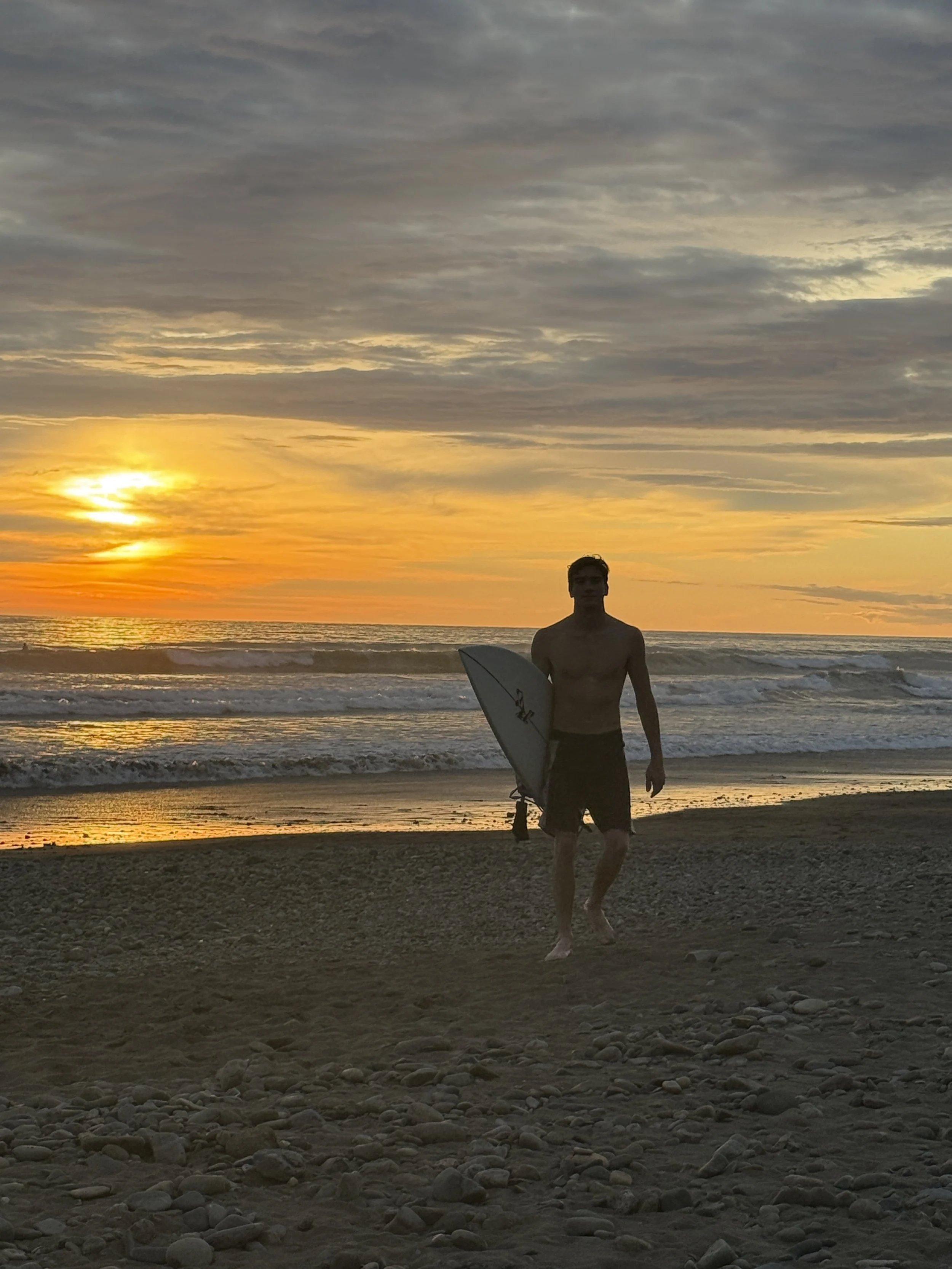
Playa Dominical is a powerful beach break that attracts surfers from around the world. The waves are real here — this is not a beginner beach — and the combination of consistent swell, warm water, and jungle-backed beach makes it one of the most atmospheric surf experiences in Central America. Even non-surfers find Dominical mesmerizing to watch at sunset, with sets rolling in against a backdrop of jungle and golden light.
Pavones, further south near the Panamanian border, is one of the longest left-hand point breaks in the world. On a good day, rides of over a minute are possible. Pavones is remote, unhurried, and deeply beloved by the surfing community for exactly that reason. Getting there requires commitment, but for serious surfers it is a pilgrimage worth making.
For guests staying at Vistas Coronado, both Playa Dominical and the surrounding breaks are within easy reach — one of the many reasons the southern Pacific makes such a perfect base for an active luxury trip.
The Road South — A Critical Note
You absolutely need a car in this region — and I strongly recommend a 4x4. The main coastal highway is excellent, but the side roads leading to lodges, waterfalls, beaches, and viewpoints are frequently steep, unpaved, and in rainy season, genuinely challenging. A standard rental car will limit what you can access. A 4x4 opens up the entire zone.
Dominical and the Hills Above Uvita
South of Manuel Antonio the landscape opens up and the coast becomes wilder. Dominical is a small surf town with a bohemian energy — excellent waves, laid-back restaurants, and a growing collection of remarkable hillside properties with Pacific views that stop your heart.
This stretch of highway south from Dominical toward Uvita is one of the most beautiful drives in Central America. The road hugs the coast, the jungle presses in from both sides, and every turn reveals another view of the Pacific stretching to the horizon.
The hills surrounding Uvita are home to an extraordinary collection of boutique properties and private villas — many perched high above the jungle with 180-degree views of the Pacific, the whale tail formation below, and rivers winding through the valley.
This is also where I own Vistas Coronado — a private luxury estate in the hills of Hatillo, just minutes from Playa Dominical. Two homes, five bedrooms, two infinity-edge pools overlooking the Pacific, and a front-row seat to the wildlife and natural beauty that makes this region so extraordinary. If you're considering the southern Pacific zone, I'd love to show you what a stay at Vistas Coronado looks like.
Marino Ballena National Park — Where Whales Come to Breathe
Near the town of Uvita, the coastline forms a natural tombolo — a sandbar extending into the ocean in the unmistakable shape of a whale's tail. This is Marino Ballena National Park, one of the most unique geographical formations in Central America and one of Costa Rica's least crowded national parks.
Humpback whales migrate to these warm Pacific waters twice a year — July through October and December through April — to breed and give birth. Marino Ballena sees one of the highest concentrations of humpback whale activity in the entire Pacific.
A morning boat tour into the marine park during whale season is one of those experiences that is genuinely difficult to put into words. Dolphins are a near-daily presence in the park year-round, and snorkeling over the coral formations reveals a vibrant underwater world that most visitors never know exists.
Corcovado — The Edge of the World
At the southern end of the Osa Peninsula, Corcovado National Park represents Costa Rica in its most untouched form. National Geographic has called it one of the most biologically intense places on earth — and that description is not hyperbole.
Corcovado is home to all four of Costa Rica's monkey species, all six of its wildcat species, tapirs, harpy eagles, scarlet macaws, and more species of flora and fauna per square kilometer than almost anywhere else on the planet.
Getting to Corcovado requires planning. The most common approach is via the coastal village of Drake Bay — accessible by small plane from San José or by boat along the Sierpe River through the mangroves. Visits require certified local guides and the park strictly limits daily visitor numbers. This is not a place you can simply show up and enter.
For the right traveler — adventurous, curious, and willing to be slightly uncomfortable in exchange for something genuinely extraordinary — Corcovado is a once-in-a-lifetime experience.
When to Visit
The dry season runs roughly December through April — blue skies, lower humidity, and easy road access. The green season runs May through November, bringing regular afternoon rains that keep the jungle impossibly lush and the waterfalls at their most dramatic. Whale season aligns with the green season, making July through October a particularly spectacular time to visit.
Rates are lower in green season, crowds are thinner, and the landscape is at its most intensely beautiful. The trade-off is that some dirt roads become challenging after heavy rain — another reason a 4x4 is essential.
How Many Days Do You Need?
I recommend a minimum of five to seven days to experience the region properly — enough time to explore Manuel Antonio, make the journey to Nauyaca, spend time on the Marino Ballena coast, and venture toward the Osa Peninsula if Corcovado is on your list.
I typically design itineraries that move south gradually — beginning in Manuel Antonio and ending in the Uvita or Drake Bay area — so the sense of discovery builds as you venture further from the familiar. This is not a destination where I recommend rushing. The southern Pacific reveals itself slowly, and the travelers who allow it that time come home transformed.
Ready to Plan Your Southern Pacific Journey?
I'd love to help you design an experience that captures everything this extraordinary region has to offer — including a possible stay at Vistas Coronado, my own private estate in the hills above Dominical.
Get in touch and let's start planning.
About the Author
Kerri Wilson is the founder of Kerri'd Away Travel, a luxury travel advisory based in Coronado, California. She specializes in bespoke travel experiences for discerning adults and families — and owns Vistas Coronado, a private luxury estate on Costa Rica's southern Pacific coast. Kerri'd Away Travel is affiliated with Fora Travel.
